
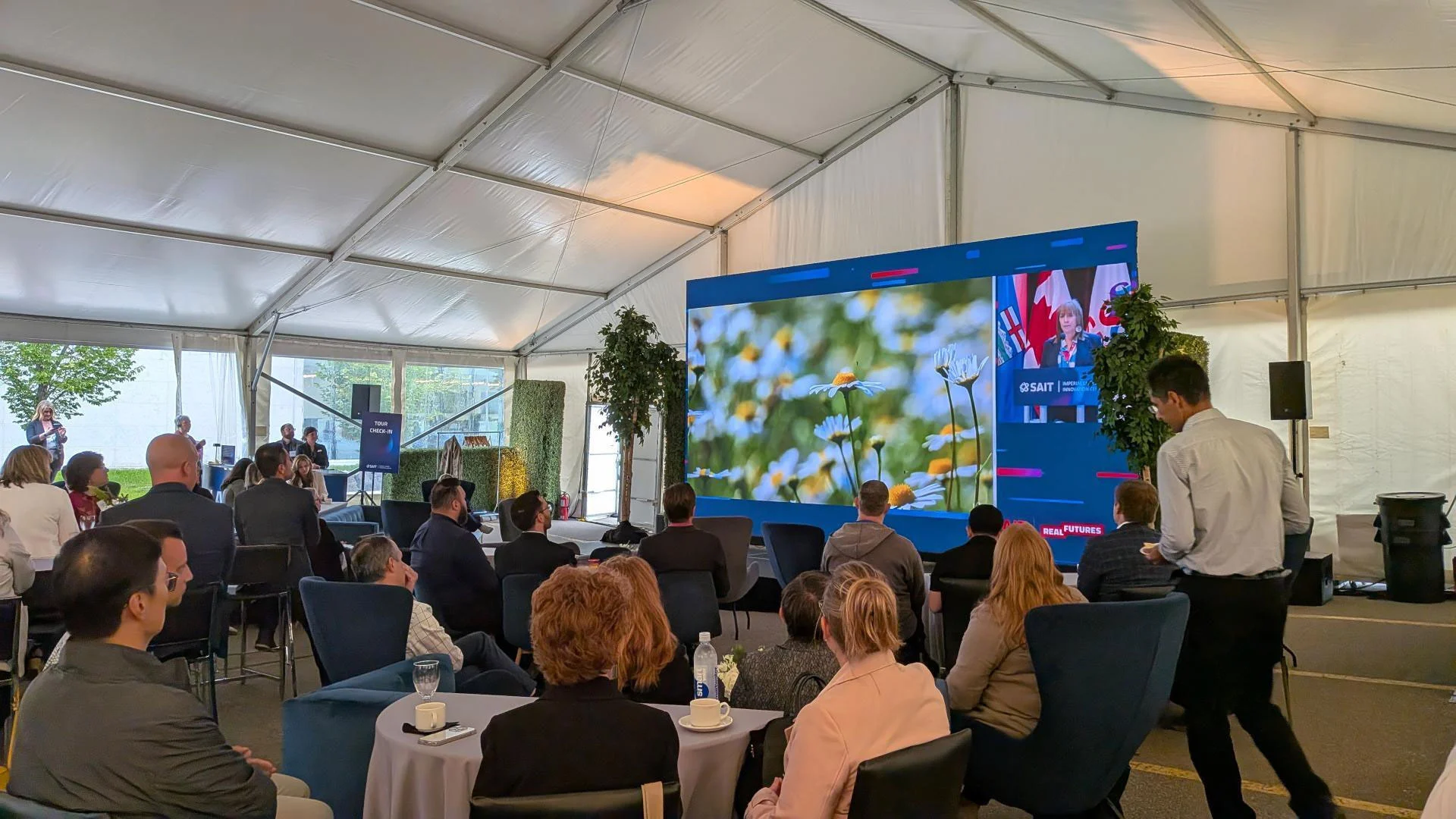
There is a common misconception in the world of corporate events that professional event production only matters for large conferences or major stage productions. After producing hundreds of small events every year for more than a decade, we have learned that small, intentional changes can dramatically improve engagement with meeting content.
Small corporate meetings place people closer to the message. The audience is smaller and the environment is more intimate, which means expectations for clarity and engagement should actually be higher. When production is handled thoughtfully, even a meeting of 30 or 50 people can feel polished, intentional, and impactful.
Most of us have attended a small meeting where little thought was given to staging, sound, lighting, video, or even the orientation of the room. You find yourself sitting in a dim meeting space while a presenter paces in front of a projected PowerPoint that only the first few rows can see clearly. The speaker talks without a microphone and half the room is struggling to hear.
Eventually someone in the audience has the thought.
“This should have been an email.”
Professional live event production and audiovisual services help create the conditions where communication happens clearly and naturally. The goal is not to overwhelm a room with technology. The goal is to use the right tools in the right way so that speakers feel confident and audiences stay engaged.
When the fundamentals of event production are executed well, the technology disappears and the message becomes the focus.
Here are five ways professional event production can significantly improve small corporate meetings.
1. Crystal Clear Audio Keeps the Audience Engaged
Audio clarity is the single most important element of any corporate meeting. If you have to choose one discipline over another, choose sound that is optimized for spoken word.
When people struggle to hear, they stop listening. Even minor audio issues force the audience to work harder than they should, which quickly leads to fatigue and disengagement.
Professional audiovisual production ensures that microphones are selected appropriately, speakers are positioned correctly, and sound levels are balanced throughout the room. Even in smaller spaces, these details matter.
When audio is clear and comfortable, the audience can focus entirely on the message being delivered.
2. Thoughtful Camera Placement Improves Visibility
Many corporate meetings now include some form of hybrid participation. Remote attendees join by video, presentations are recorded, or content is streamed internally within an organization.
It is no longer acceptable to treat remote participants as an afterthought. They are a distinct audience with their own needs and their own experience of the meeting. Considering them as you would any other audience demographic is essential, and it does not need to add significant cost.
Camera placement plays a critical role in making this work effectively. Professional event production teams understand how to position cameras so that speakers appear natural and presentations remain legible. A poorly placed camera can make even a well-designed presentation difficult to follow.
Good camera placement ensures that both in-room and remote participants remain connected to the meeting.
3. Lighting Helps Speakers Communicate with Confidence
Lighting is often associated with large productions, but it plays an important role in smaller meetings as well.
Thoughtful event lighting design ensures that speakers are visible, facial expressions are clear, and attention is naturally directed toward the presenter. Lighting also creates a more professional environment that helps speakers feel comfortable and confident.
Even modest lighting adjustments can dramatically improve how a meeting feels to both the audience and the presenter.
4. Stage Design Establishes Focus
In many small meetings, the stage area is treated as an afterthought. A simple podium is placed at the front of the room and the presentation begins.
However, thoughtful event staging and room layout can significantly improve how a meeting unfolds. A well-positioned stage helps establish a focal point for the audience, creates clear sightlines, and reinforces the importance of the message being delivered.
Even subtle adjustments to stage placement or furniture layout can change how a room feels.
Consider the orientation of the room. Most conference rooms have a natural layout where the stage sits on the opposite wall from the entrance. In many cases this means the room is longer than it is wide, which places the back rows of the audience farther from the presenter than necessary.
Pro tip: For your next meeting, consider rotating the room ninety degrees so the stage sits along the long wall rather than the short one. This simple change brings more of the audience closer to the presenter and often improves engagement throughout the room.
Professional event production strategy considers how the physical environment supports communication.
5. Visual Storytelling Strengthens the Message
Every corporate meeting tells a story. Whether the objective is to share strategy, celebrate success, or align a team around future goals, the way information is presented shapes how people remember it.
Professional live event production supports visual storytelling through thoughtful presentation design, screen placement, and the careful use of graphics or video content. Production teams also consider elements that audiences may not consciously notice but that shape how a message is received. These include entrances and exits, background music, musical stingers that signal transitions, and the placement of a presenter relative to their screen.
Pro tip: Because audiences read from left to right, stage right (the presenter’s right side) is often the more visually dominant position on stage. Placing a speaker there can subtly strengthen their presence and help guide the audience’s attention.
When visual elements are integrated effectively, they reinforce the speaker’s message and help the audience retain key ideas long after the meeting ends.
Small Meetings Deserve Thoughtful Production
Professional audiovisual production is not reserved for large conferences. In many ways, it matters even more for smaller gatherings where communication is direct and personal.
Clear audio, effective lighting, thoughtful staging, and well-placed cameras create an environment where speakers can communicate confidently and audiences remain fully engaged.
Because no event that matters is ever too small for thoughtful production.
Explore the full idea in our article No Event Is Too Small.
Connect with us on LinkedIn, Instagram, and Facebook.